

What is DTF Printing? | Direct to Film Printing Guide
Direct to Film Printing: What is DTF Printing?
If you've been looking at custom printed clothing recently, you've probably come across DTF printing.
DTF stands for Direct to Film. It's a digital printing method where your artwork is printed onto a special film, coated with adhesive and then heat pressed onto the garment or product.
At House of Uniforms, DTF has become one of our most versatile branding methods because it can produce vibrant, detailed, full-colour designs across a wide range of fabrics and products.
But like every branding method, DTF has things it does brilliantly and situations where we'd recommend something else.
Here's how it works.
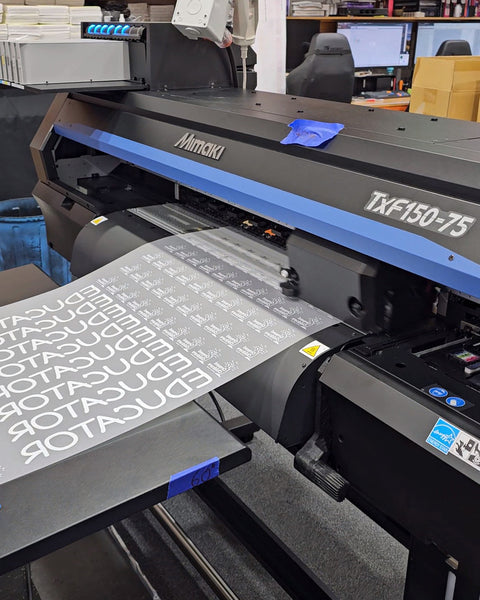
How Does DTF Printing Work?
DTF printing is a multi-stage process.
First, your artwork is digitally printed onto a clear film using specialised inks, including white ink where required. While the print is still being produced, an adhesive powder is applied and the transfer is then cured.
Once ready, the printed film is positioned on the product and applied using a heat press. The combination of heat, pressure and time bonds the design to the fabric.
Unlike DTG, where ink is printed directly onto the garment, a DTF design is created separately before being transferred onto it.
The result is a vibrant, flexible print capable of reproducing detailed and multi-colour artwork.
What Fabrics Can DTF Print On?
One of DTF's biggest strengths is its broad fabric compatibility.
Unlike DTG, which we only use on 100% cotton garments, DTF can be used across many different fabrics, including cotton, polyester and blended fabrics.
That makes it useful across a huge variety of uniforms, workwear, sportswear, T-shirts, hoodies, bags and other products.
The surface still matters, though.
Because the transfer sits on the surface of the product, coarse or heavily textured fabrics can affect how the finished print looks. A smooth T-shirt and a heavily textured garment won't necessarily produce identical results.
So while DTF is extremely versatile, “it sticks to practically everything, therefore everything is perfect for DTF” isn't quite how it works.
What Does DTF Printing Look & Feel Like?
DTF generally produces a vibrant, crisp print with strong colour and opacity.
Unlike DTG, where the print can feel more integrated into the fibres of a cotton garment, DTF sits on the surface of the fabric. That means you can usually feel the printed area when you run your hand across it.
How noticeable that feels depends heavily on the artwork.
A small chest logo will feel very different from a giant solid rectangle covering most of the front of a T-shirt. As always, the design itself is part of choosing the right branding method.
Can DTF Print Full-Colour Artwork?
Yes. Detailed, multi-colour artwork is one of DTF's strengths.
DTF uses a digital printing process, so complex logos, fine details and artwork containing many colours can be reproduced without creating separate screens for each individual colour.
This makes DTF useful for everything from straightforward company logos to more complicated graphics.
Can DTF Print on Black & Dark Garments?
Yes, this is an area where DTF performs particularly well.
Our DTF printer uses CMYK plus white ink. The white layer provides a base beneath the coloured artwork, helping colours remain vibrant when they're applied to dark fabrics.
Because of the way the inks are layered, white ink can sometimes be slightly noticeable within certain colour shades. This is a normal characteristic of the printing process rather than a fault with the print.
What is DTF Printing Best For?
DTF is particularly useful for:
- full-colour logos and artwork
- detailed or complex designs
- light and dark garments
- cotton, polyester and blended fabrics
- workwear and uniforms
- sportswear
- T-shirts, polos and hoodies
- bags and other suitable products
- both smaller and larger print runs
Its versatility makes DTF one of the methods we consider when a customer wants the same branding applied across different garment types or fabrics.
DTF vs DTG Printing
These two acronyms are confusingly similar, but the processes are quite different.
DTF = Direct to Film
The artwork is printed onto film and then heat transferred onto the garment.
DTG = Direct to Garment
The artwork is printed directly onto the garment itself.
DTG suits smooth, lightweight 100% cotton garments.
DTF works across a broader range of fabric compositions and generally produces a more vibrant, opaque print that sits on the surface of the garment.
Neither is automatically better.
For a cotton T-shirt with artwork where a soft, matte finish is the priority, we may recommend DTG. For branding across polyester garments, different fabrics or where strong colour and opacity are important, DTF may be the better option.
Learn more about DTG Printing here
DTF vs Screen Printing
Traditional screen printing and DTF can both create bold printed designs, but they get there very differently.
Screen printing requires artwork to be separated by colour, with individual screens and setup required to produce the design. DTF digitally prints the complete artwork onto film before transferring it to the garment.
That makes DTF particularly useful for multi-colour and detailed artwork without requiring separate screens for every colour.
Screen printing can still make sense for certain very high-volume jobs, but newer digital processes such as DTF have removed many of the traditional setup barriers associated with custom garment printing.
We no longer offer screen printing in-house; where it remains the right solution for a very high-volume project, we can manage production through our partner studios.
DTF vs Digital Heat Transfers
Both processes involve applying a design to a garment using heat, but they're not the same thing.
DTF prints artwork onto a specialised film using ink and adhesive before the complete design is heat transferred onto the garment.
Our Digital Heat Transfers use digitally produced transfer media and also give us access to specialist finishes and effects that aren't available via DTF, including options such as metallic, puff, glitter, flock and glow-in-the-dark.
If your priority is vibrant full-colour branding across different fabrics, DTF may be an excellent option. If the design calls for a particular specialty finish, another transfer method may make more sense.
Is DTF Printing Durable?
DTF is designed for wearable, washable garments and can produce a flexible and durable result when the garment and process are correctly matched.
Fabric, artwork, print coverage, washing, drying, heat and general wear all influence how both the garment and its branding age.
Always follow the care instructions supplied with your branded clothing.
Why Is There a Mark Around My New DTF Print?
DTF uses heat and pressure to apply the transfer.
When your garment first arrives, you may notice what looks like a slight “bruise” or press mark around the printed area. This is a normal part of the production process and generally reduces and in most cases disappears, after the garment has been washed.
It doesn't mean the garment has been damaged or the print has been incorrectly applied.
How Large Can a DTF Print Be?
Our current maximum DTF print area is 350 mm wide × 450 mm long.
The best print size still depends on the garment and artwork. Just because something can physically be printed at the maximum size doesn't necessarily mean that's the size at which it will look best.
Our team can help determine an appropriate print size and position for your chosen product.
What Artwork Do You Need for DTF Printing?
Good artwork produces better branding.
For DTF printing, our preferred artwork format is EPS, although a high-resolution TIFF may also be suitable.
If your artwork isn't production-ready, don't panic. Artwork preparation can form part of the branding setup process.
For new artwork, we also produce a physical DTF sample for approval before bulk production so you can see the size, colour and appearance of the branding before we proceed.
What Can Be DTF Printed?
DTF is available across a huge variety of suitable products at House of Uniforms, including T-shirts, polo shirts, workwear, sportswear, hoodies, jackets and bags.
When you're shopping online, look at the Branding Options on the individual product page. If Direct to Film | DTF is listed, the product has been identified as suitable for the process.
Choosing DTF or Another Branding Method
You don't need to arrive at House of Uniforms already knowing whether you need DTF, DTG, Supacolour or Digital Heat Transfers.
That's what we're here for.
We work with multiple branding processes, so we can consider the product, fabric, artwork, colours, quantity and required finish before recommending a method.
Sometimes DTF's versatility makes it the obvious choice. Other times DTG, embroidery, Supacolour or another method will give you a better result.
The goal isn't to put every logo through the DTF machine.
It's to choose the right branding method for the job.
👉 Looking for something to print on? Browse everything we print on
Ready to use DTF? Visit our Direct to Film Garment Printing | DTF service page for current quantities, artwork requirements, print specifications and information on requesting a quote.
DTF Printing FAQs
What does DTF stand for?
DTF stands for Direct to Film. Artwork is digitally printed onto a specialised film and then transferred onto the garment using heat and pressure.
Is DTF printing the same as DTG?
No. DTF prints onto film before transferring the design to the product. DTG prints ink directly onto the garment.
Can DTF print on cotton?
Yes. DTF can be used on suitable cotton garments as well as polyester and blended fabrics.
Can DTF print on polyester?
Yes. Its compatibility with polyester and other fabric types is one of the reasons DTF is such a versatile garment-printing method.
Can DTF print on black clothing?
Yes. DTF uses white ink beneath the coloured artwork where required, allowing vibrant designs to be produced on black and other dark garments.
Is DTF better than DTG?
Neither method is universally better. DTG suits smooth 100% cotton garments, while DTF works across a broader range of fabrics and provides strong colour and opacity.
Can DTF print photographs and detailed designs?
DTF can reproduce detailed, multi-colour artwork and fine elements, making it suitable for complex designs.
Does DTF printing crack?
A properly produced DTF print is designed to be flexible and durable, but no printed garment is indestructible. How it ages depends on the garment, artwork, print coverage, wear and how it's washed and cared for.
Why is there a mark around my DTF print?
Heat and pressure used during application can temporarily leave a press mark or “bruise” around the printed area. This is normal and generally reduces after the first wash.
What is the maximum DTF print size?
Our current maximum DTF print area is 350 mm wide × 450 mm long, although the ideal size will depend on your artwork and chosen garment.
Does House of Uniforms do DTF printing in Melbourne?
Yes. We produce DTF and other custom branding from our purpose-built production facility in Moorabbin, Melbourne, with orders delivered Australia wide.
How do I order DTF printing?
Shoot us an email with your artwork, let us know what you are after and we'll prepare a custom quote for you.
Easy Explainers | Load Up On Learnings


- Choosing a selection results in a full page refresh.
!